
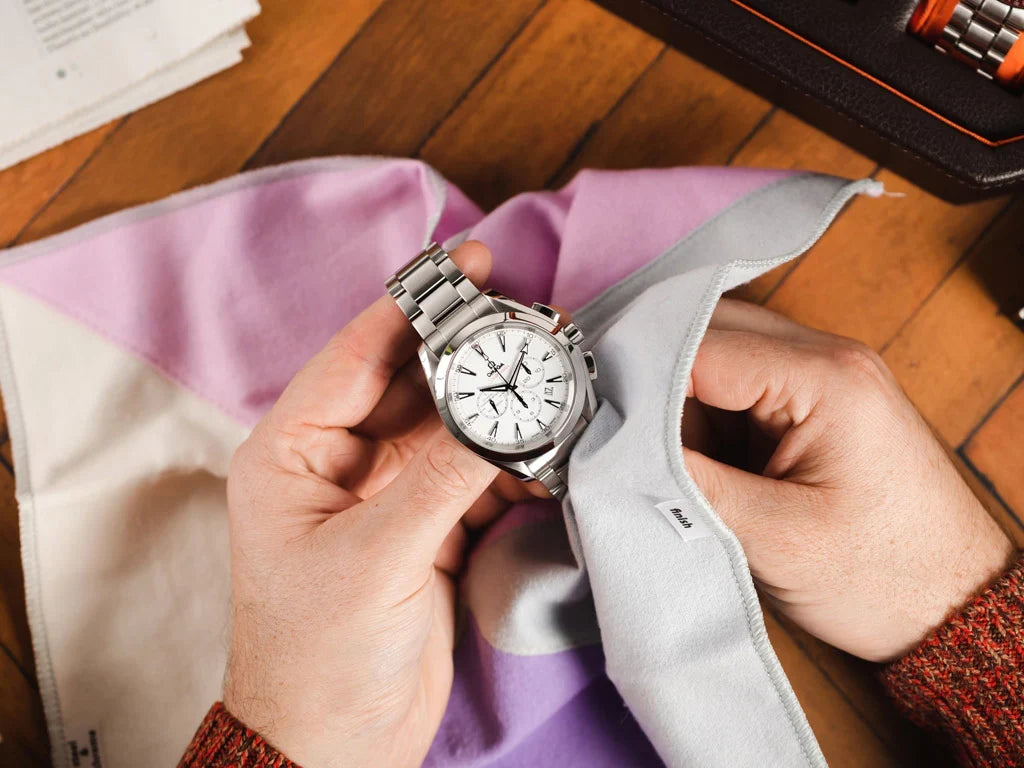
A good watch is built to last decades, and many are passed down through families. But even the best-made Rolex, Omega or Cartier needs a little attention to stay accurate and looking its best.
Whether you've just bought your first piece or you've owned yours for years, here are the habits that protect your investment.
1. Know What's Inside Your Watch
How you care for a watch depends on what powers it.
- Mechanical watches use a wound mainspring and hundreds of tiny moving parts, which need lubricating oils to run smoothly.
- Automatic watches are mechanical watches that wind themselves from the motion of your wrist. You can read more about how an automatic watch works if you're curious.
- Quartz watches use a battery and a crystal oscillator, and generally need less frequent servicing.
If you're unsure which you own, check the dial, the case back or the manufacturer's paperwork.
2. Service It at Sensible Intervals
Over time, the oils inside a mechanical watch age and wear, which can affect accuracy and cause parts to wear faster. Intervals vary by brand and model, and many manufacturers suggest anywhere from around five to ten years. Always check the guidance for your own watch, and have it looked at sooner if it starts running fast, slow or erratically.
A full service typically involves taking the movement apart, cleaning and lubricating it, replacing worn parts, resealing the case and testing the result. It's far cheaper to service a watch on schedule than to repair one that has been neglected.
3. Keep Water Resistance in Check
Water resistance isn't permanent. The rubber gaskets that seal the case can degrade with age, heat and exposure to chemicals. A watch that was water resistant when new may not be today, so have the seals tested whenever the watch is serviced, and especially before taking it swimming.
Remember to keep the crown screwed down on watches that have a screw-down crown. You can find a plain-English explanation of how water resistance ratings work if you want to know what the numbers mean.
4. Clean It Gently
For regular cleaning at home:
- Use a soft, lint-free cloth to wipe the case and crystal.
- For metal bracelets, a soft brush and lukewarm soapy water works well, but only on watches that are properly water resistant with the crown secured.
- Dry thoroughly, especially between the links.
- Never use harsh chemicals, abrasive cloths or ultrasonic cleaners at home, as they can damage seals and finishes.
For leather straps, avoid water entirely and wipe gently with a dry cloth.
5. Think Carefully About Polishing
Polishing can bring back the shine on a case and bracelet, but it removes a very small amount of metal each time. Over-polishing softens sharp edges and the original lines of the case, which collectors tend to value.
The answer is a professional, careful approach that removes light surface marks while preserving the shape of the watch. If you'd like your watch refreshed, our Watch Polishing & Cleaning Service is available on a drop-off basis.
6. Keep Magnets Away
Strong magnetic fields can affect the accuracy of a mechanical watch. Common culprits include phone speakers, laptop and tablet covers, handbag clasps and some speakers. If your watch suddenly starts gaining time, magnetism may be the cause, and a watchmaker can demagnetise it quickly.
7. Store It Properly
When you're not wearing your watch:
- Keep it in a dry, cool place away from direct sunlight and heat.
- Use a watch box or roll with soft lining to avoid scratches.
- Keep it away from other watches and jewellery that could rub against it.
- Consider a watch winder if you own an automatic you wear only occasionally, though it isn't essential.
For valuable pieces, remember to check that your home insurance covers them. Consumer sites like Which? and MoneySavingExpert publish guides on insuring high-value items.
8. Keep Your Paperwork Safe
Your box, warranty card and service records all support your watch's value if you ever want to sell or part exchange it. Store them somewhere safe, and keep a photo or scan of each document too. Enthusiast resources like Hodinkee and aBlogtoWatch are great for learning more about your model's history and maintenance.
Looking for Your Next Piece?
If you're thinking about adding to your collection, or you'd like some advice before you buy, our team is happy to help. Read our guide on how to buy a pre-owned Rolex safely, then browse our current stock:
All of our watches come with a 2-year warranty and free insured UK delivery, and part exchange is welcome. Questions about caring for a watch you already own? Get in touch.